


Meetings have been around for centuries (cue joke about how they sometimes feel that long). But research on how to do them well only began in the last 20 years, says Joseph Allen, professor of industrial and organizational psychology at the U. Allen literally wrote the book(s) on the subject and created the Center for Meeting Effectiveness to fill the research void.
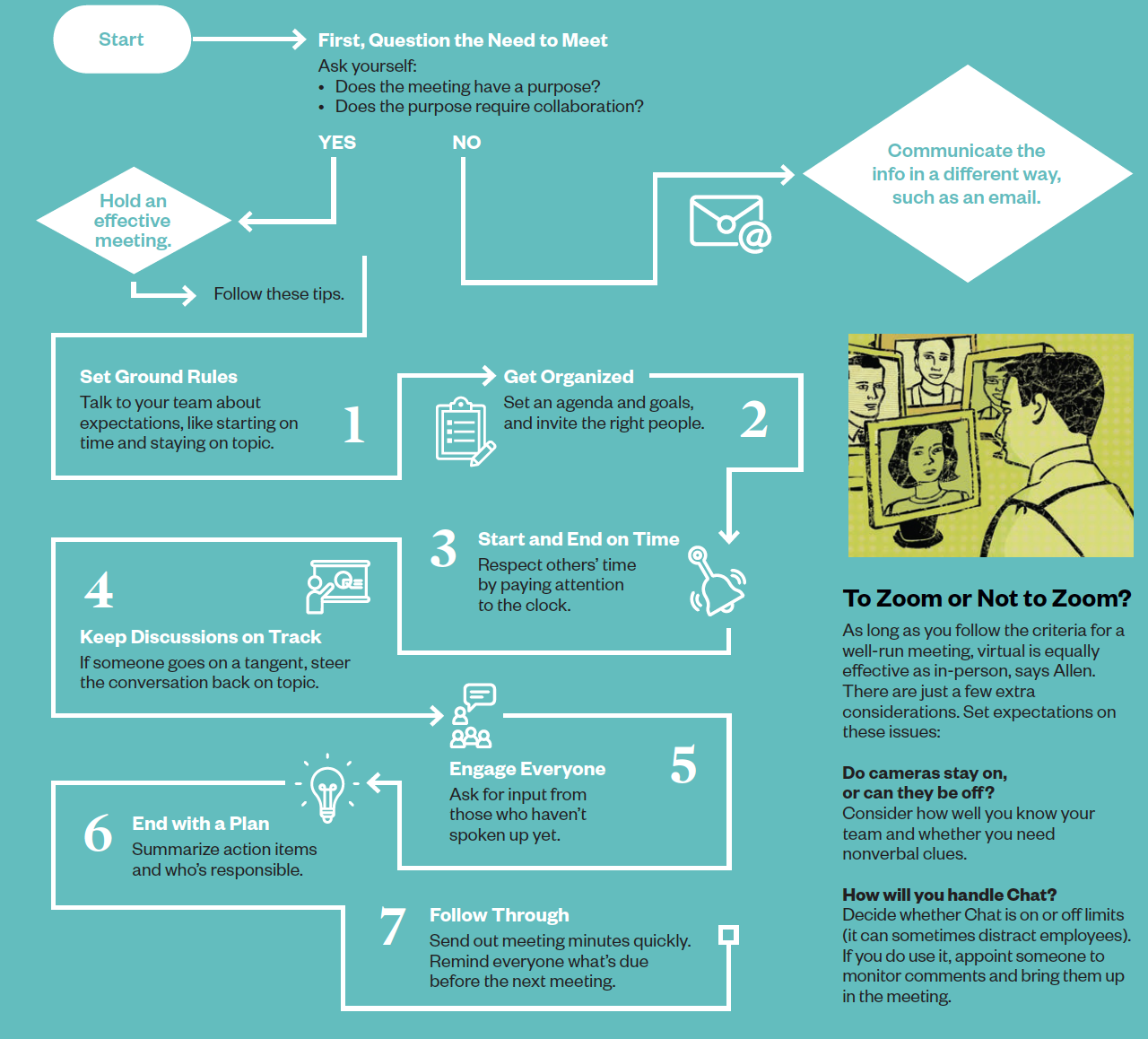
Allen says ineffective meetings can lower job satisfaction, raise stress, and lead to thoughts of quitting. On the flip side, he adds, “Good meetings increase job satisfaction and engagement, give you resources, and guard against burnout and fatigue.” Follow his guidelines for meeting success below. If you’re tempted to skip the steps, be forewarned: “Our research shows that one bad meeting causes three more meetings,” says Allen.
all the meeting that I have, and they are a lot to plan schedule execute production and how to improve that for future use too and we are doing way better day by day the more we do that I see the improvements.
we talk about our goals too, the company goals labor …. etc.
we try to excite what we have the plan for by emails because it’s too many departments involved but still like the idea of evaluating the meetings and check if we can do it with emails instead of meeting time is money..
This article really resonated! It highlighted the importance of intentional communication and evaluating whether a meeting’s value truly outweighs focusing time differently; productivity and wellbeing go hand-in-hand. What steps have you all incorporated to differentiate meaningful meetings from the ultimately time-consuming ones?